

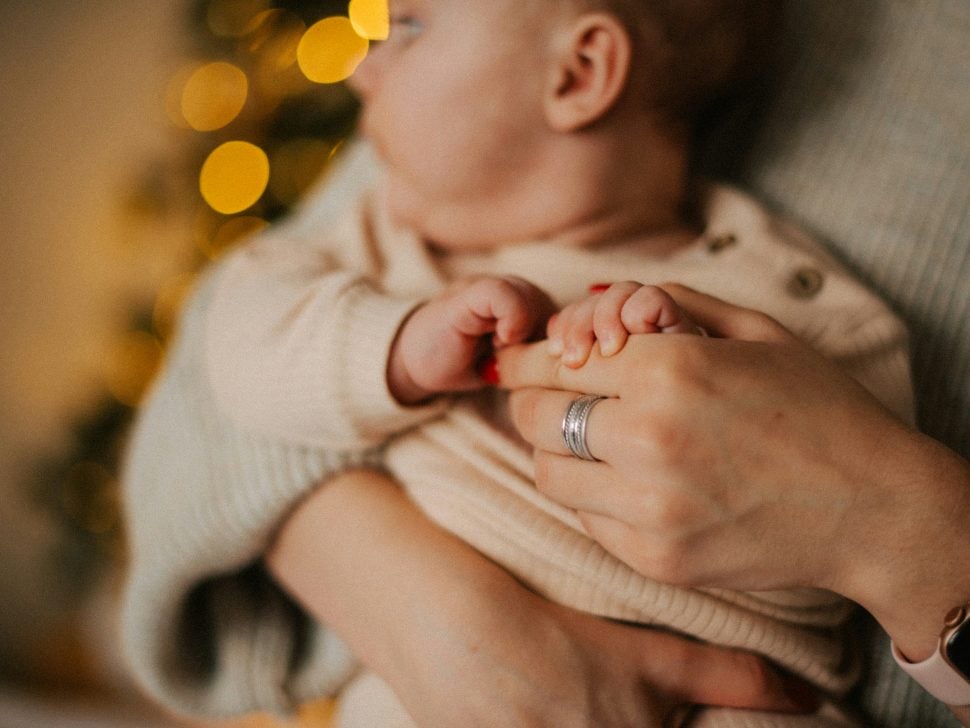
Becoming a mother is often described as the happiest time of your life, but for many women, it also comes with a quieter, less visible companion: grief.
Not always the grief of death, but the grief of who you were, the life you had before children, the birth you hoped for, the freedom, the time, the relationships, the version of motherhood you imagined. These losses can be ambiguous, invisible, and hard to name, especially in a culture that expects mothers to be grateful, glowing, and coping.
To gently unpack this invisible grief in motherhood, we spoke with Ali from Grief Guide, a registered counsellor and grief specialist based in Brisbane who supports mothers and families in person and via telehealth. In this conversation, Ali explores the hidden losses woven through matrescence, how grief shows up in our bodies, and what compassionate support can look like for mothers navigating this profound life transition.
So many people associate grief only with death. What do ambiguous or invisible losses look like in motherhood?
Most people think grief equals death, full stop. But here’s the thing: grief in motherhood shows up in so many ways that don’t involve anyone dying. These are the ambiguous and invisible losses, the ones where we’re mourning something that was never quite there but still feels profoundly absent.
And they’re everywhere if we’re brave enough to look.
- When birth doesn’t go to plan. There’s grief in the birth story that didn’t unfold the way you’d dreamed. The breastfeeding journey that never began or ended too soon. You imagined a particular beginning to your motherhood story, and when reality looks different, there’s real grief for that lost vision—even while you’re holding your healthy baby.
- When relationships shift. The partner who became a stranger in the fourth trimester. Friendships that couldn’t stretch to hold your new reality. These relationships haven’t ended, but they’ve transformed in ways you didn’t choose. You’re grieving the closeness that once was, even though the person is still right there.
- The loss of who you were. This one’s particularly messy. You’re still you, but you’re also fundamentally changed. There’s grief for the woman who could leave the house without mentally packing seventeen different emergency items. For the person who made decisions based on what she wanted, not what would work around nap schedules and meltdown prevention strategies. You’re mourning a version of yourself who still exists in memory but not in present reality.
- When you only have one. For parents with one child, every milestone becomes loaded with finality. The last time they fit in that onesie. The last time they believe in magic with complete certainty. The pressure to savour everything, to soak it all in, to not miss a single moment can become crushing. “This is it,” whispers the voice in your head. And that weight can rob the joy from the moment even as it’s supposed to enhance it.
- When you’re pulled between multiple children. Then there’s the grief that comes with being pulled in different directions by multiple children. The feeling of never being enough, of never giving enough to any one of them. You’re helping one with homework while the other needs comfort after a fall, and you’re acutely aware you’re only half-present for both. There’s grief for the undivided attention you gave your first before siblings arrived. Grief for the one-on-one time each child deserves but rarely gets. You’re mourning the mother you imagined you’d be to each of them, the one who could be fully present, fully available, fully there. Instead, you’re constantly triaging needs, making impossible choices about whose moment gets priority, and carrying the weight of all the individual experiences you couldn’t witness because you were needed elsewhere.
- The small things that hold everything. The sadness of packing away baby clothes, such a small act, yet it contains multitudes. Each tiny outfit holds a memory of a baby who no longer exists, even though the child they’ve become is right there asking for a snack. You’re grieving someone you haven’t lost, but who has still disappeared.
- The loneliness of never being alone. Perhaps the most paradoxical is the loneliness that can come even when you’re never alone. The loneliness of being constantly needed but not necessarily seen. Of having your days filled with care for someone else while your own needs become background noise. You can feel isolated while surrounded by other mothers at playgroups and swimming lessons, grieving a sense of connection that feels just out of reach.
What makes these losses particularly hard is that there’s nothing to point to. No socially recognised ritual for mourning them. You can feel ungrateful for grieving when you “have it all” a healthy child, a home, a family.
But grief doesn’t require permission or justification. These invisible losses are real. They deserve witnessing, and naming them is often the first step towards healing.
Why do you think our culture struggles to recognise these kinds of grief?
We don’t do grief well in Western culture. And that’s when we’re talking about what’s even seen as “appropriate-enough” grief.
When someone dies, the system gives you three days of bereavement leave if you’re lucky, and friends and family often rally in those early days with meals, cards, and words of support. But beyond that initial period, the support rarely continues. And that’s when the loss is clear and recognised.
With motherhood, it’s even more complicated. We’re told over and over again that it’s the happiest time of our lives, to be grateful for this precious baby. And of course we are grateful. But the loss is often quietly lurking there in the background too.
I think we struggle because we like things to be simple, one or the other. It’s good or it’s bad. We’re happy or we’re sad. We need help or we’re fine.
But motherhood doesn’t work like that. It brings such complexity of feeling on any given day, in any given moment. We’re constantly oscillating between deep joy and sorrow. Pure love and pure overwhelm. Absolute gratitude and significant resentment.
And when you’re experiencing all of that at once, there’s no space in our culture to say, “I love my child desperately and I’m also grieving parts of myself.” It feels ungrateful. It feels like complaining. It feels like you’re not coping when you “should” be.
So we stay quiet about these losses, we carry them alone, and they become invisible, not because they’re not real, but because we haven’t made room for them to exist alongside the joy.
Early motherhood is full of contradictions. How do you help women hold space for all those conflicting emotions?
Often the first step is giving women permission, and safety, to acknowledge what’s really going on for them.
We know that early motherhood is an exhausting and overwhelming time for all mums, no matter whether it’s their first baby or their fifth. There’s not a lot of room to slow down, to pause, to be curious about what’s actually happening for Mum.
So much of my work is helping mums to notice what happens in the little windows of quiet:
What does it feel like in your body?
What thoughts keep showing up?
Where are the pressure points?
If you were to name it as grief, what is it you might be grieving?
Because here’s the thing: these contradictions don’t need to be resolved.
You don’t have to choose between gratitude and resentment. You don’t have to fix the fact that you can feel overwhelming love and overwhelming exhaustion in the same breath. Both can be true. Both are true.
The bittersweet nature of grief work is that there often isn’t a “problem” to solve. There certainly isn’t something to fix. This is true when someone has died, I can’t bring them back. And it’s true of early motherhood, I can’t restore your sense of freedom or change your birth story or give you back the sleep you’ve lost.
But there is magic in dropping the mask of being totally fine and owning what’s actually happening.
When we stop trying to resolve the contradictions and instead just witness them, name them, make space for them to exist, something shifts. Not the circumstances, but the weight of carrying it all alone.
It’s about creating a space where you can say, “I love my baby fiercely and I’m also mourning my old life” without someone rushing in to fix it or tell you to be grateful or suggest you’re not coping.
Sometimes we just need someone to sit with us in the mess and say, “Yes, this is hard. Yes, you can hold all of these feelings at once. Yes, you’re still a good mother.”
Many mums feel guilty for grieving their “old life.” How can we reframe grief with more compassion and less shame?
The guilt is so real, isn’t it? That quiet voice saying you shouldn’t be sad about anything when you have a healthy baby, when this is what you wanted, when others would give anything to be in your position. That guilt becomes its own layer of grief.
But reframing starts with understanding what grief actually is.
Grief isn’t a complaint or ingratitude. It’s the simple acknowledgment that something mattered to you.
When you grieve your old life, your freedom, your spontaneity, your uninterrupted sleep, you’re not wishing you could undo motherhood. You’re honouring that those things were meaningful, and it’s okay to miss them even as you love what you have now.
We can hold multiple truths at once. You can love your child deeply and still miss the version of yourself who could finish a hot coffee or feel momentum in your career. These feelings aren’t in conflict, they’re part of being human.
I often remind mums that grief isn’t a sign you’re doing motherhood wrong. It’s evidence you’re doing it honestly. You’re allowing yourself to feel the full weight of this transformation instead of pretending it’s all joy and baby giggles.
The compassionate reframe is this: your grief doesn’t take anything away from your love. If anything, it deepens it. You’re actually living this experience, fully and courageously.
So instead of “I shouldn’t feel this way,” try, “Of course I feel this way. This is a massive change, and I’m allowed to grieve what’s shifted while loving what I have.”
That’s not shame. That’s being human.
The transition into motherhood and matrescence can feel like a loss of self. How can mothers gently reconnect with who they are becoming?
Transitioning into motherhood and matrescence is very much akin to when a loved one has died. It’s as if there is a big brick wall where the loss happened, when you’ve entered motherhood. There is the world that was prior to this change, and the world that you’re living in now. And the bigger the gap between the world prior and the world that is now, the more distress is likely to appear.
This is why that feeling of losing oneself is often so pronounced as you enter into this new role and new version of yourself with no roadmap. It’s like you’re speaking another language. You’re not just tired or adjusting, you’re genuinely navigating a completely different world to the one you knew before.
The goal of living in this new world isn’t about “getting back” to who you were on the other side of that brick wall, because you can’t go back. It’s about figuring out this new version of you as you walk this path of motherhood.
Matrescence is as significant as adolescence. Your brain is literally rewiring, your body has transformed, your priorities have shifted. You’re not the same person, and trying to return to your old self can actually create more grief. Instead, we’re learning to meet and get curious about who you’re becoming in this new world.
Some gentle ways to do this:
Start small and without pressure. You don’t need to rediscover your entire identity over a weekend. Notice what makes you feel a little more like yourself in this new reality. Is it the moment your baby falls asleep on your chest and you can actually finish a thought? Hearing your favourite song in the car? Standing in the shower for an extra minute? A brief conversation with another adult at the playground? These tiny moments of recognition matter.
Let go of the “shoulds.” There’s so much noise about how you should be mothering, what you should care about, how you should feel. The gap between the mother you thought you’d be and the mother you actually are can feel like another loss. Getting curious about who you actually are, rather than who you think you should be, is where reconnection begins.
Give yourself permission to experiment. Try things without the pressure of them becoming “your thing.” Maybe you thought you’d join a mothers’ group and feel connected but actually you feel more like yourself texting an old friend. Maybe you imagined loving baby yoga but you’d rather just walk around the block with the pram. Your needs are allowed to surprise you.
Find the “and.” You are a mother and you are still a whole person. You don’t have to choose. Some days the mother part will take up more space, and that’s the season you’re in. But you can still hold onto the threads of who you are beyond that role, even if you’re only able to tend to them in small ways right now.
Be patient with the in-between. This phase where you’re no longer who you were but not yet sure who you’re becoming? That’s not a problem to solve. That’s the reality of transformation. You’re learning a new language, building a new life, and that takes time.
Connect with your grief. Sometimes reconnecting with yourself means first acknowledging what you’ve lost on the other side of that brick wall. When you make space for the grief of your old identity, your old world, you actually create room for your new one to emerge.
You don’t have to love this version of yourself yet. You’re allowed to be in the messy middle of becoming, still figuring out how this new world works. That’s exactly where you need to be right now.
What role do social expectations play in the emotional load on mothers, especially during holidays?
Social expectations add another layer of pressure onto mothers, and they’re often invisible until you start paying attention.
A good indicator is when we find ourselves listing off all the things we “should” be feeling or doing, or how motherhood “should” look. “Should” is a marker I talk to clients about learning to notice. To pause and ask:
Who says?
Where does this expectation actually come from?
Is it yours, or is it something you’ve absorbed from family, social media, or the cultural script of what a “good mother” looks like?
And then holidays come along and amplify all of it.
There’s this expectation that holidays are a time of merriment and joy, yet most mums I know, myself included, find this to be the most stressful time of year. You’re managing schedules, coordinating plans, juggling multiple family gatherings, and spending a hell of a lot. You’re organising all the presents, planning the meals, remembering who’s allergic to what, trying to capture the “perfect” moments for photos. And all of this is happening at a time when you’re already running on empty.
Add in small children, lack of sleep, everyone wanting to have a piece of your baby, routines completely out the window, travel plans, different parenting opinions from extended family, and you’re in for one chaotic time.
I remember so clearly my first Christmas as a new mum, feeling the most vulnerable I’d ever felt, and welcoming my family into my home for the holidays thinking it would be like it was pre-kids. Only to be met with unsolicited feedback on my child, my parenting, unsolicited advice about sleep and feeding and whatever else. And this vicious cycle of bub and me feeding off each other’s energy and falling into a total heap at the end of it.
What makes the holidays so hard is that mums are often expected to be the emotional architects of these occasions. You’re meant to create the magic, hold the traditions, manage everyone’s feelings, smooth over family tensions, and do it all with a smile while also caring for a tiny human who doesn’t care that it’s Christmas. The invisible labour is enormous.
And if you’re grieving parts of your old life, or your old holiday traditions, or the spontaneity you used to have, that grief doesn’t pause for the festive season. If anything, it intensifies. You’re surrounded by images of “perfect” family moments while you’re touched out, overwhelmed, and possibly feeling guilty for not enjoying it more.
You often speak about the nervous system’s role in grief. How does grief show up in the body, and how can mothers support themselves?
Grief is a whole-body experience.
For some, there’s great attunement to thoughts and feelings. For others, grief shows up in the body before the brain and heart catch up. There might be:
brain fog
body aches
tension in your shoulders or jaw
a constant knot in your stomach
bone-deep exhaustion that sleep doesn’t fix
racing heart or shallow breath
snapping at your partner over the smallest things
or feeling completely numb and disconnected
This makes sense when we understand that grief activates our nervous system. Your body is responding to loss the same way it responds to threat.
Research on the Window of Tolerance states that when we’re under stress or grieving, we can get pushed outside our optimal zone where we can think clearly and regulate our emotions. We either go into hyperarousal (feeling anxious and overwhelmed), or hypoarousal (feeling shut down and disconnected).
In early motherhood, this gets even more complicated because your nervous system is already dysregulated. You’re sleep-deprived, your hormones are fluctuating, you’re constantly on high alert for your baby, and your body is still recovering. Layer grief on top of that and it’s no wonder so many mums feel completely depleted.
And here’s the really tricky part: it can be almost impossible to know what’s grief, what’s just the reality of early motherhood, and what’s the combination of both. Is the exhaustion from broken sleep, or from carrying unprocessed loss? Is the brain fog from hormones, or from your nervous system being overwhelmed? Often, it’s all of it at once, tangled together.
You don’t need to untangle it perfectly to support yourself.
So what can you do?
Start with the basics. Water, nourishing food, rest when you can get it. These aren’t luxuries; they’re necessities for a nervous system under stress.
Move your body gently. A walk with the pram, stretching on the floor during tummy time. Gentle movement helps your nervous system process and release what it’s holding.
Find your exhale. Deep breaths with a longer exhale signal to your nervous system that you’re safe. It sounds simple, but it works.
Notice without judgment. Where are you holding tension? Just acknowledging it can help.
Seek connection or space. Your nervous system co-regulates with others, whether that’s a hug from your partner or a coffee with a friend. But if you’re touched out, needing space is equally valid.
Let yourself cry. Tears are your body’s way of releasing stress hormones.
You don’t have to do all of these things perfectly. Sometimes just surviving the day is supporting your nervous system. Sometimes just acknowledging, “my body is carrying a lot right now” is enough.
You’re in the middle of one of life’s most profound transformations, and your body is doing its best to keep you going.
What small, accessible rituals can help mothers honour their losses and grief during busy or emotionally charged seasons?
It doesn’t have to be elaborate.
Sometimes it’s as simple as acknowledging out loud, “I’m grieving this.” Sometimes it’s letting yourself cry when the tears come instead of pushing them away. Sometimes it’s that extra minute in the shower where you let yourself feel the weight of it all.
Engaging in practices that support your nervous system, the ones we talked about earlier: breath work, gentle movement, noticing where you’re holding tension, these are also ways of honouring your grief. They’re not separate from the ritual, they are the ritual.
Grief doesn’t need grand gestures to be witnessed. It needs consistent, compassionate acknowledgment. Even in the busiest, most chaotic seasons of early motherhood, you can pause for a breath and say, “This is hard. I’m allowed to feel this.”
That’s honouring your loss. That’s the ritual.
In terms of the holidays in particular, sometimes honouring yourself means literally quieting the noise. Things like:
Not going to the shops in peak times when it’s overwhelming for you and for bub—doing click and collect instead
Ordering takeout rather than cooking the elaborate meal
Putting on headphones to block out the chaos
Saying no to plans that don’t fit into this season of motherhood
Redefining your role at the holidays—maybe you’re not hosting this year, maybe you’re leaving early, maybe you’re skipping certain traditions altogether
That’s not failing at the holidays. That’s protecting your capacity and honouring what you actually need.
How do you see grief intersecting with mental health challenges like anxiety or depression in the postpartum period?
I’m not a huge fan of labels, as I worry they can sometimes pathologise what is actually a normal, human experience. There is such an overlap between the experience of matrescence, grief, anxiety, and depression that it can be really hard to separate them, and I’m not sure we always need to.
What I see happening is that many mums keep pushing and pushing, and the unacknowledged grief they’re holding is what eventually bubbles up into symptoms that look very much like anxiety or depression. The constant worry, the inability to sleep even when the baby sleeps, the feeling of being overwhelmed, the loss of joy in things that used to matter—these can absolutely be signs of postnatal anxiety or depression. But they can also be signs of adjusting to motherhood, unprocessed grief, a nervous system that’s been pushed beyond its capacity, and a lack of support to hold what’s actually happening.
Remember that brick wall I mentioned earlier? The one that marks the world that was before motherhood and the world you’re living in now? Sometimes what looks like depression or anxiety is actually the distress of standing in this completely new world with no roadmap, grieving the old world, and having no one acknowledge that this transition is profound and difficult.
You’re not just adjusting to a baby, you’re adjusting to an entirely different existence, and that’s enormous.
I’m not saying grief and mental health challenges are the same thing. And sometimes medication or specific mental health treatment is absolutely what’s needed. But I think we need to be curious about what’s underneath.
Is this solely a mental health issue?
Or is there grief that’s been ignored, minimised, or pushed down because there was no space to acknowledge it?
Often, it’s both. And treating one without acknowledging the other misses something important.
What worries me is when mums choose to share their experiences more widely, other people around them can be quick to label the experience as a problem to fix or solve. “You should see someone” or “Have you talked to your doctor about medication?” can come from a place of care, but it can also shut down the conversation before we’ve really listened to what’s going on.
Many people find themselves in my office because their “stuff” has been deemed too much for their loved ones. And whilst I’m glad they’re getting support, I wish my role as a specialised grief, loss, and bereavement counsellor wasn’t needed in quite this way. I wish we had communities that could sit alongside others in difficult seasons with more grace, love, and empathy.
Where is the village?
Because what many mums need isn’t just a diagnosis or a treatment plan. What they need is to be witnessed, to have their grief acknowledged, to know they’re not broken for finding this hard. Sometimes the most healing thing we can offer is simply sitting with someone in their pain and saying, “This is really difficult. You’re not alone. I’m here.”
For mothers who recognise themselves in this but aren’t sure where to start, what does reaching out for support actually look like?
This looks different for everyone.
Some people will send an email, a DM, call, or text saying they’re looking for some help. Some will book straight in for an appointment without speaking first.
All ways are welcome.
It’s not uncommon for people to say to me, “I don’t know if my grief or my experience is big enough to get help,” and my response is always to ask what’s happening for you. If it’s painful for you, it’s painful. If your grief is significant for you, it’s significant. If it matters to you, it matters to me. There’s no threshold of suffering you need to meet to deserve support.
In that first conversation, there’s no pressure. We’re just talking. You’re not committing to anything, you’re simply exploring whether this feels like the right fit for you.
I’ll ask you what’s brought you here, what’s happening in your world, and what you’re hoping for. Sometimes people know exactly what they want to work on. Often, they just know something feels hard and they need someone to help them make sense of it.
From there, we figure out what the next step might look like. It might be regular sessions with me. It might be me pointing you towards a helpful resource or a different kind of support that’s better suited to what you need. It might be that I’m someone in the wings, should you need me down the track.
I’m not in the business of trapping anyone into therapy with me. I don’t take it lightly, the courage it can take to open up your experience to someone else, so my role is to help you find what’s actually going to support you—whether that’s with me or not.
And if you’re still not sure whether to reach out, here’s what I’d say: you don’t have to wait until you’re at breaking point. You don’t have to have tried everything else first. You’re allowed to ask for support simply because something is hard. That’s reason enough.
Finally, can you tell us a little about Grief Guide and how you support mothers and families?
Grief Guide was born out of my breadth of experience working with grief, loss, and bereavement for over a decade. I’ve worked across oncology, palliative care, perinatal loss, sudden and traumatic deaths, fertility and chronic health challenges, with families navigating separation, and with children and young people. And whilst this might seem diverse, the common thread of each role I’ve taken up is the grief and loss perspective that underpins the challenges that clients face.
As a mum of small children myself, I deeply understand the compounding demands of life and loss. Crucially, my approach is shaped by my own lived experiences of loss, including a challenging fertility journey to motherhood and my own postpartum experiences. I know firsthand how invisible, isolating, and painful the loss of hope, identity, and a perceived future can be when you’re grieving a non-death-related loss. This blend of clinical expertise and personal understanding is what fuels Grief Guide.
I offer specialised grief, loss, and bereavement counselling in person in Sumner, Brisbane, or via telehealth through phone or video call. Telehealth is often the preferred option for those deep in grief or managing the constant demands of motherhood, as it means you can connect from the comfort and privacy of your own home without worrying about logistics like driving or childcare. Although in saying that, many a session has occurred with a bub playing on the floor or sleeping on mum’s chest. You’re welcome as you are, wherever you are.
Sessions are a space where you can bring all of it, the mess, the contradictions, the grief you’re not sure you’re “allowed” to feel. There’s no pressure to have it figured out, no expectation that you’ll be “over it” by a certain timeline. We move at your pace, and we follow what matters to you.
I also run a quarterly free community event called a Death Café. It’s a community space where we come together to drink tea, eat cake, and dip our toes into a conversation about death and dying, a conversation most of us avoid. Beyond this, there is no agenda, no structure, no expert leading the discussion. The conversation goes wherever the group needs it to go.
Sometimes people speak about losses they’ve faced. Sometimes they talk about fear of loss, or how strange it feels to be talking about it at all. Sometimes people just listen. It’s a space to explore these topics without judgment, without having to fix anything, and with people who understand that death and grief are part of being human.
If any of this resonates with you, I’d love to hear from you. You can find more information at www.griefguide.com.au, or reach out however feels comfortable for you. Whether you’re ready to start now or just want to know support is there when you need it, I’m here.
Closing Thoughts & Where to Find Support
The invisible grief in motherhood is real, whether it’s the loss of who you were, the birth you hoped for, the time and freedom you once had, or the version of motherhood you imagined. Naming that grief isn’t a failure. It’s a deeply human response to a life that has changed in profound ways.
You don’t have to carry it alone.
When mothers are supported in their grief, their mental health, and their matrescence, everyone benefits our kids, our partners, our communities, and the generations that follow.


You may also be interested in...



Learn about the support you didn't know you needed.
We have cherry picked the most useful resources for your fourth trimester so that you don't have to waste precious hours searching.

Article - Elisha Wildblood and Louise Barton (Not Another Onesie)
Beyond Baby Stuff: Gifting Support to New Mothers
At Not Another Onesie, we're passionate about gifting support services that improve life after birth for mamas everywhere. We believe new mothers need love, support, and nourishment more than baby stuff.

Article - Kylee Shepherd (Ma Wisdom)
Keeping the Village Strong: How Modern Grandparent Workshops Support Families
Becoming a parent doesn’t just change your life; it reshapes the whole family. As new mums navigate sleepless nights, identity shifts, and the steep learning curve of parenthood, their own parents are experiencing a transition too. That’s where modern grandparent workshops come in. Across Australia, these programs are helping families strengthen connection, understanding, and boundaries so that everyone, parents, grandparents, and babies, can thrive together.
Article - Shaily Nadav (Kavanah Care)
A Sacred Space for Postpartum Recovery
In our ongoing series spotlighting the incredible services in our Not Another Onesie village, we spoke with the heart and hands behind Kavanah Care, a wellness sanctuary offering postpartum support and bodywork that feels like a warm exhale for mothers in their most tender chapter.

Article - Elisha Wildblood and Louise Barton (Not Another Onesie)
Discover the life changing benefits of planning for your postpartum
Discover how proactive postpartum planning can transform your journey into motherhood. This post outlines the critical benefits of preparing ahead—from organizing nutritious meals and setting up recovery systems to establishing clear boundaries with visitors and building a trusted support network. With practical tips and insights, you'll learn how a well-crafted plan can help you recover, bond with your new-born, and navigate the early days of motherhood with confidence.