

Rebuilding Hormonal Balance in the Fourth Trimester | Postpartum Recovery & TCM Support
Rebuilding Hormonal Balance in the Fourth Trimester
The fourth trimester is a critical window for postpartum recovery and hormonal balance. After birth, rapid postpartum hormone changes affect mood, energy, sleep, and emotional wellbeing. Understanding how to support your body during this time can make a profound difference in how you heal, rebuild, and feel in early motherhood.
Why do I still not feel like myself, even though the baby is here?
If you’ve whispered that question in the quiet hours of early motherhood, you are not alone. The fourth trimester is a profound season of postpartum recovery, and rebuilding hormonal balance takes time, nourishment, and support.
While the world focuses on your newborn, your body is navigating dramatic postpartum hormone changes. After birth, oestrogen and progesterone drop rapidly, your nervous system recalibrates, and if you’re breastfeeding, prolactin rises to sustain milk production. This hormonal shift is powerful, and it affects your mood, energy, sleep, and emotional resilience.
The Hormonal Reset: A Sudden Shift After Birth
In the hours following birth, your placenta is delivered, and with it, the primary source of pregnancy hormones. Oestrogen and progesterone, elevated for nine months, fall rapidly.
This abrupt hormonal shift affects:
Brain chemistry
Temperature regulation
Energy production
Emotional resilience
Oestrogen supports serotonin (your “feel good” neurotransmitter), vaginal tissue integrity, skin and hair health, and mood stability. When levels drop quickly, it can contribute to:
Postpartum anxiety
Tearfulness
Night sweats
Mood fluctuations
That unfamiliar feeling of being “not quite yourself”
At the same time, progesterone also falls away. Without it, many women describe feeling wired yet deeply exhausted, a common experience in early postpartum recovery.
When we understand what is happening hormonally, we can support it gently and intentionally, rather than expecting ourselves to simply “bounce back.”
The Nervous System & Postpartum Depletion
Birth is not only a hormonal event, it is a profound nervous system event.
Labour, blood loss, interrupted sleep, round-the-clock feeding, and constant attunement to your baby place enormous demand on your system. Even in the most beautiful birth experience, your body has worked.
In Traditional Chinese Medicine (TCM), postpartum is seen as a sacred healing window, a time when Blood and Qi (vital energy) have been expended and must be replenished.
The body is open. Receptive. Vulnerable.
When supported well, this window allows for deep and lasting healing.
If not replenished, depletion may linger and appear months later as:
- Irregular cycles
- Lingering postpartum fatigue
- Anxiety
- Low mood
- Difficulty regaining strength
Support during this window is not indulgence.
It is preventative postpartum care.
(And this is exactly why we place such reverence on the first 40 days after birth.)
Why Your Postpartum Symptoms Make Sense
Common fourth-trimester symptoms include:
- Mood fluctuations
- Night sweats
- Hair shedding (postpartum hair loss)
- Vaginal dryness
- Postpartum anxiety or tearfulness
- Deep, bone-level fatigue
Hair shedding is often delayed, appearing around three to four months postpartum as oestrogen levels stabilise. Night sweats reflect your body recalibrating fluid balance. Vaginal dryness correlates with lower circulating oestrogen levels. Fatigue is not just from broken sleep; it is also from rebuilding blood volume, tissues, and hormonal rhythm.
If you are quietly nodding as you read this, your body may simply be asking for deeper, more intentional support. Book in a call here to chat further.
Our Fourth Trimester In-Home Postpartum Care
At Womb To World, we honour this sacred 40-day postpartum window through our Fourth Trimester in-home care offering, a deeply nurturing treatment designed specifically to support postpartum hormonal balance and recovery.
We come to you.
In the softness of your own space, we assess what your body needs in that moment and tailor your treatment accordingly, whether that is:
- Postpartum acupuncture
- Chinese herbal medicine
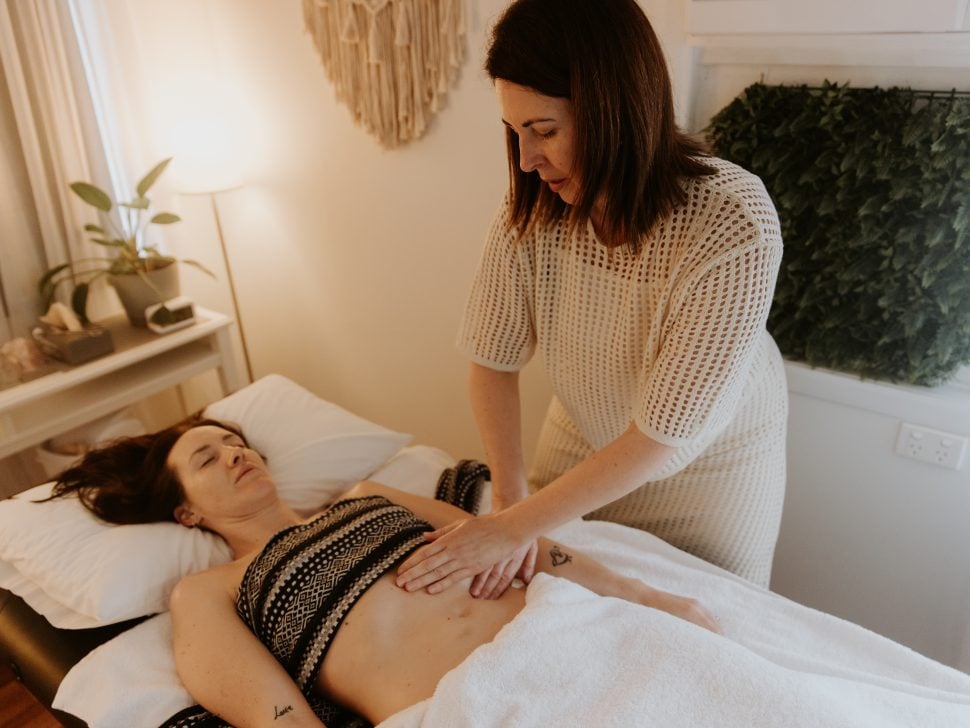
- Womb massage
- Or a combination of Traditional Chinese Medicine therapies
No rushing.
No leaving the house with a newborn.
Just gentle, personalised in-home postpartum support focused entirely on replenishing you.
Because growing, birthing, and nourishing a baby is extraordinary work.
And the mother deserves to be nourished, too.
If you are in your fourth trimester, this is your invitation to be held, supported, and cared for through Traditional Chinese Medicine postpartum care designed to restore balance, rebuild energy, and honour your recovery.

Free Download - Fill The Freezer: recipes to gift or make ahead for yourself
This recipe collection has been created with you in mind: quick to make, freezer-friendly, and packed with ingredients that fuel tired bodies and busy minds. Each one can be baked ahead of time for yourself or wrapped up and given as a thoughtful gift.
Inside, you’ll find:
✨ A crunchy granola that doubles as breakfast or a gift in a jar
✨ A hearty, veggie-loaded bolognese for nights when cooking feels impossible
✨ A warming coconut curry with flexible protein options
✨ A soothing chicken and veg broth bowl that restores and comforts
✨ A nourishing choc-chip slice perfect for mama fuel
✨One bowl banana loaf to recharge and replenish with a cup of tea
You may also be interested in...


Cub & Kin
Cub & Kin is a local duo supporting Sutherland Shire mums through one of life’s biggest transitions. Founded by Jess, a midwife, and Kat, a doula, they offer a engaging, informed, genuinely supportive and no-nonsense approach to pregnancy, birth and those early newborn weeks!



Learn about the support you didn't know you needed.
We have cherry picked the most useful resources for your fourth trimester so that you don't have to waste precious hours searching.

Article - Louise Barton & Elisha Wildblood (Not Another Onesie)
How to Calm Your Nervous System During Stressful Times (Especially for Mothers)
When the world feels uncertain, your nervous system will naturally try to protect you. But safety doesn’t only come from everything being calm. It also comes from the small, steady moments you create, and the support you allow yourself to receive. You don’t have to carry it all on your own. And you were never meant to.
Article - Dr Mandy Godwin (Mums in Bloom)
Navigating the Emotional Side of Pregnancy and New Motherhood
The emotional side of pregnancy and new motherhood doesn’t come with a manual, but thankfully, Mandy Godwin, a perinatal psychologist in Australia and founder of Mums in Bloom, has created two free guides to help mums navigate this tender time and support their emotional wellbeing during pregnancy and postpartum.

Article - Louise Barton & Elisha Wildblood (Not Another Onesie)
Motherhood & Friendships – Why Everything Feels Different & How to Navigate the Change
The shift in friendships after having a baby is real, and it’s something almost every mother experiences. Let’s dive into why friendships change after motherhood, how to navigate the emotional shifts, and ways to find a new support system that actually fits your life as a mum.
Article - Elisha Wildblood and Louise Barton (Not Another Onesie)
Beyond Baby Stuff: Gifting Support to New Mothers
At Not Another Onesie, we're passionate about gifting support services that improve life after birth for mamas everywhere. We believe new mothers need love, support, and nourishment more than baby stuff.