The Postpartum Training That Changed How I Saw Motherhood and Inspired Not Another Onesie

When I became a mother for the first time, I remember the absolute love. I also remember the shell shock. And the fear. 

The overwhelming realisation that I was now responsible for keeping this tiny human alive. That every decision I made could affect her. That somehow, despite having absolutely no idea what I was doing, I was expected to just  know and get on with it.

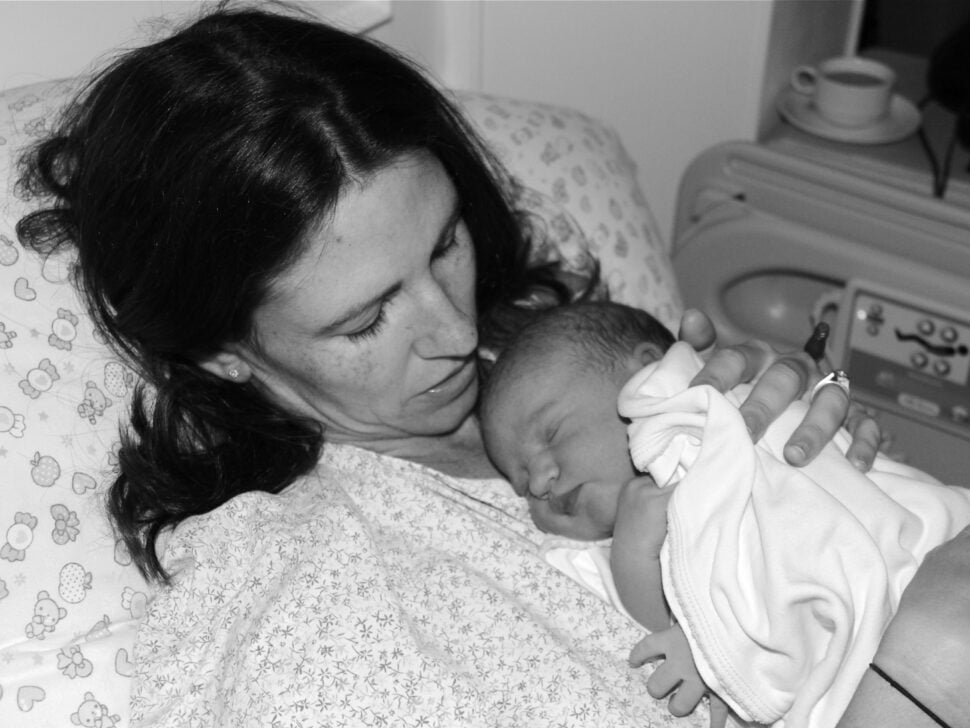
I remember aching after birth, feeling physically uncomfortable and having no real understanding of what my body needed to recover. I knew how to focus on my baby, but I had very little idea how to care for myself.

And I remember the complicated emotions.

I loved my daughter more deeply than I knew was possible, but I also felt overwhelmed, anxious, and completely unlike myself.

My husband returned to work, and I remember feeling so resentful by how easily life seemed to carry on for him, while mine had changed beyond recognition. My body, my identity, my sense of freedom, my entire daily rhythm.

Everything was different.

Looking back, I didn’t need baby advice. I needed someone to really hold me in their loving care.

What I Wish I’d Known About Postpartum Support

I wish someone had told me that I mattered just as much as my baby.

That I was recovering from birth while navigating one of the biggest transitions of my life. That it was okay to need help, to rest, to feel overwhelmed, and to have a whole collection of conflicting emotions.

I wish I’d had someone to guide me, reassure me, remind me of my own ability and simply listen. Someone to make sure I was okay, or at least hold space for me when I wasn’t.

My husband wanted to help, but this was all completely foreign to him, too. His suggestion was that I should get out walking to feel better. And while it came from a good place, in those first few days, going on big walks was actually detrimental to my healing. 

I needed to be in bed. I needed rest, nourishment, reassurance and someone who understood what I was going through.

Instead, we were out visiting people, and I was wondering why I felt so awful.

As I went on to have more children and spoke with other mothers, I began to realise how common these feelings were.

So many of us were experiencing similar things, yet somehow we each thought we were the only one.

And that, in itself, felt like such a missed opportunity for connection and support.

How I Found My Way to Postpartum Doula Training

By the time I had my fourth baby, I had experienced motherhood across several countries.

Each of my four children was born in a different country, which meant four different postpartum experiences, different approaches to care, and four enormous transitions.

It also meant packing up homes while pregnant or caring for babies and small children, moving countries, and trying to settle into unfamiliar places while navigating life with a newborn.

I’d studied various modalities in health and wellbeing over the years, but increasingly, I felt drawn to working specifically with mothers.

I knew how vulnerable and isolating early motherhood could feel. And I knew how much difference the right support could make.

I didn’t want other mothers to feel as alone or unsupported as I had.

That was when I discovered Julia Jones and her Newborn Mothers postpartum training.

At the time, postpartum doulas weren’t nearly as widely recognised or talked about as they are today. But something about the philosophy of caring deeply for a new mother resonated with me immediately.

I loved the idea that supporting a mother through those early weeks and months could have an impact far beyond that immediate postpartum period.

Not just on her, but on her baby, her relationships and her whole family.

You can explore Newborn Mothers postpartum training here. 

What Studying Postpartum Care Taught Me

The training opened my eyes to a much deeper understanding of what it means to care for someone during such a vulnerable and intimate time in their life.

It wasn’t simply about knowing what to do for a new mother. It was about understanding why that care matters, how to offer it with intention, and how different every mother’s needs can be.

There were a few things that particularly stayed with me.

1. Postpartum care should be about the mother, too

This was probably the biggest shift in my thinking.

Until then, so much of my experience of early motherhood had been baby-focused. The baby’s feeding, sleeping, development, health and wellbeing.

Of course, all of those things matter enormously.

But somewhere in all that attention, the mother can almost disappear.

Learning to put the mother’s wellbeing at the centre of postpartum care made me reflect on my own experiences in an entirely different way.

Suddenly, so many things began to make sense.

It also sparked my deeper interest in matrescence — the physical, emotional, psychological and social transformation that happens as a woman becomes a mother.

We prepare so extensively for the arrival of a baby, yet often give comparatively little attention to the person becoming a mother.

And I began to wonder why.

2. There is no one-size-fits-all approach to postpartum support

Another thing I loved about the Newborn Mothers training was discovering just how many different ways there are to care for a mother.

Postpartum support can be practical, emotional, physical or social. It might involve preparing nourishing meals, creating opportunities for rest, offering reassurance, helping around the home or simply being a calm and compassionate presence.

What one mother needs might be completely different from what another needs.

And the same is true for the people providing that care.

The training encouraged us to recognise our own strengths, interests and abilities, and consider how these could shape the work we offered.

I found that incredibly empowering.

There wasn’t one rigid way to be a postpartum doula. There was room for creativity, individuality and for building a practice around the work that felt most meaningful to you.

3. Caring for mothers is a privilege

One of the most beautiful things I took away from the training was a deeper appreciation of just how meaningful postpartum work can be.

To be invited into someone’s life at such a vulnerable, intimate and transformative time is an enormous privilege.

And the impact of that care can reach much further than we might ever know.

I also loved learning from Julia herself. I found her incredibly generous with her time, wisdom and knowledge.

Her experience and passion for supporting mothers came through in everything she did, and I felt fortunate to be learning from someone so deeply invested in this work.

The course opened my eyes to different approaches to postpartum care and started a much bigger journey of learning about mother care, recovery and matrescence.

Why I Believe We Need to Rethink Postpartum Care in Australia

The more I learnt, the more I began to recognise the gaps in the way we support new mothers.

So often, a mother gives birth, receives care in hospital and then returns home with a baby and very little understanding of what support she might need herself, let alone where to find it.

Her partner may have returned to work. There might be other children needing school pickups, meals to prepare, washing to do and all the ordinary demands of family life continuing around her.

Meanwhile, she’s recovering physically, adjusting emotionally and learning how to care for a newborn.

And somehow, she’s expected to work it all out.

What became increasingly clear to me was that postpartum support shouldn’t be something a mother has to reach breaking point before seeking.

It should be something we talk about, prepare for and normalise from the beginning.

Traditionally, extended families and communities often played a greater role in caring for new mothers. Today, many families live far from relatives, have limited practical help or simply don’t have an established village around them.

That’s where friends, partners, community groups and professional postpartum services can make such a difference.

A village doesn’t have to look the same for everyone.

But every mother deserves to know that support exists and that she doesn’t have to do it all alone.

How Postpartum Training Eventually Led to Not Another Onesie

I had started working as a postpartum doula shortly before COVID, and as I began exploring how to bring that work back to life, something became increasingly obvious.

There were actually so many wonderful people doing extraordinary work to support mothers.

Postpartum doulas, many of whom had trained through Julia’s Newborn Mothers courses, were creating beautiful businesses and offering genuinely valuable services to families.

And beyond doulas, there were lactation consultants, pelvic health physiotherapists, psychologists, nutritionists, birth educators, community groups and so many other professionals working across different aspects of motherhood.

The support existed.

But it was fragmented, scattered and often incredibly difficult to find.

And I kept thinking about the mothers who didn’t even know what kind of support was available, let alone where to start looking for it.

What if we could bring these incredible people together into one beautiful, accessible space?

Somewhere a mother could explore the different kinds of care available to her, discover services she might never have known existed, and find support that suited her own circumstances.

That initial idea grew beyond postpartum doulas to include support across pregnancy, birth, postpartum and motherhood.

And eventually, Not Another Onesie was born.

Our philosophy of support over stuff came from recognising that what mothers often need most isn’t another baby product.

It’s care, connection, practical help, reassurance and people who understand what they’re going through.

Today, that thinking continues to shape everything we do at NAO.

We want mothers to be able to find support more easily, whatever stage they’re at, wherever they live, and whatever their individual needs might be.

Explore the Not Another Onesie Directory

Could Postpartum Doula Training Be Right for You?

One of the lovely things about working in this space is speaking with so many women who feel drawn towards supporting other mothers.

Sometimes it’s a mother who, after having her own children, wants to explore work that feels deeply meaningful and can potentially fit around family life.

Other times it’s an existing health or wellbeing professional who wants to expand their knowledge or offer more holistic support to the mothers they already work with.

Postpartum care training can sit beautifully alongside other areas such as massage, yoga, nutrition, birth support and complementary wellbeing practices.

What I particularly valued about Newborn Mothers was that it gave me a rich, well-rounded understanding of what mothers need during those early days, weeks and months, while allowing me to imagine how I might use that knowledge in a way that suited my own strengths.

Of course, building a career as a postpartum doula takes more than completing a course. It also involves establishing a business, building relationships, finding clients and developing experience.

But for me, the training provided an important foundation.

And you don’t necessarily need to be planning a professional career to find value in learning more about postpartum care.

Understanding how to truly support a new mother can be valuable for partners, grandparents, friends and anyone who wants to be part of someone’s village.

If you’re curious about postpartum care training, I’d encourage you to explore Julia Jones’ Newborn Mothers courses and see whether the approach resonates with you.

Discover Newborn Mothers training

A Final Thought: We All Have a Role in Supporting Mothers

When I think back to that first-time mother I was, frightened, exhausted, aching and wondering why everything felt so hard, I wish she’d known what I know now.

That she wasn’t supposed to have all the answers.

That she deserved to be cared for, too.

And that the right support could have made those early weeks feel very different.

I couldn’t have known when I enrolled in Julia’s training that it would eventually help shape something as meaningful to me as Not Another Onesie.

But it changed the way I understood motherhood, the way I thought about caring for mothers, and the kind of work I wanted to do.

And that has stayed with me ever since.

Because when we care for mothers, we’re doing so much more than helping them through the early days with a baby.

We’re helping them feel seen, supported and valued as they find their way through one of life’s biggest transitions.

And that is something worth investing in.


A little note: The training has had such a profound impact on our work we have become  an affiliate partner of Newborn Mothers, which means we may earn a small commission if you enrol through our links, at no extra cost to you. We only ever share courses, services and resources we genuinely believe in and feel are valuable to our community. This article is 100% my personal experience of training with Julia Jones and how it helped shape the beginnings of Not Another Onesie.

Leave a Comment

Your email address will not be published. Required fields are marked *

Learn about the support you didn't know you needed.

We have cherry picked the most useful resources for your fourth trimester so that you don't have to waste precious hours searching.

How to Talk About Sharing the Mental Load with Your Partner: A Complete Guide Article Featured Image
Is This Normal? The Emotional Rollercoaster of Pregnancy and Motherhood. Article Featured Image