When Should You Seek Support During Pregnancy or After Birth? A Perinatal Psychologist Explains

Wondering if What You’re Feeling Is Normal?

Wondering whether what you’re feeling is a normal part of pregnancy or early motherhood, or whether it might be time to seek professional support? Pregnancy and the first year after birth can bring enormous emotional changes, and it isn’t always easy to know when to ask for help. In this article, perinatal psychologist Dr Mandy Godwin explains some of the signs that may indicate you could benefit from perinatal mental health support, and the different support options available.

You are lying in bed running through every possible thing that could go wrong. Or maybe you have already had the baby and you are sitting in the dark at 2am wondering why this does not feel the way you thought it would.

And somewhere in the back of your mind is a question you are not sure you are allowed to ask:

Do I actually need to see someone about this?

If you are asking that question, you are already doing something important. You are paying attention. That is not a sign of weakness. It is a sign that something in you is asking for what you need.

This post will help you figure out whether what you are feeling is the normal difficulty of pregnancy and new motherhood, or something that would benefit from professional perinatal mental health support. If it is the latter, we will look at what kind of support might actually be the right fit.

When Is It More Than the Normal Challenges of Pregnancy and Motherhood?

Pregnancy and early motherhood are genuinely hard. Nobody disputes that. But “this is hard” has become a blanket that covers everything, and sometimes it covers too much.

It is normal to feel anxious during pregnancy. It is normal to feel overwhelmed after birth. It is normal to grieve parts of your old life. It is normal to have days where you cry and you do not really know why.

But there is a difference between the hard that eases, shifts, and eventually lets you breathe, and the hard that settles in, takes over, and starts running your day.

The fact that something is common does not mean you have to push through it. One in five Australian women experiences a perinatal mental health condition during pregnancy or in the first year after birth. That is not rare.

And most of those women could benefit from professional support, yet many wait months or never seek help at all.

Signs You May Need Mental Health Support During Pregnancy

Pregnancy comes with a lot of emotional upheaval, and most of it gets dismissed as “hormones.” But some of what you are experiencing might be worth taking seriously.

Consider reaching out for perinatal mental health support if you notice:

  • Persistent worry that you cannot switch off. Not the occasional “will the baby be okay?” but the kind of anxiety that follows you through the day, wakes you up at night, and does not respond to reassurance.
  • Dread about the future. Not normal nerves about labour, but a heavy, ongoing sense that something terrible is going to happen or that you will not cope.
  • Withdrawing from people you are usually close to. Pulling away from your partner, avoiding friends, cancelling plans because being around people feels too much.
  • Difficulty sleeping even when you are exhausted. Your body is tired but your mind will not stop.
  • Loss of interest in things you usually enjoy. Nothing feels worth the effort. You are going through the motions.
  • Feeling detached from the pregnancy. You know you should be excited, but you feel numb, distant, or disconnected from what is happening in your body.
  • Previous history of anxiety, depression, or trauma. If you have experienced mental health difficulties before, pregnancy can reactivate them. That does not mean it will happen, but it does mean you might benefit from having support in place before the baby arrives.

Any one of these on its own does not necessarily mean something is wrong. But if several of them are present, or if even one is persistent and getting in the way of your daily life, it is worth talking to someone.

If several of these resonate, you do not have to figure it out alone. You can book a free 15-minute call to talk it through, or keep reading to understand what kind of support might help. If you want to start understanding the emotional shift ahead, my free guide Becoming a Mother covers what most antenatal education leaves out.

Signs You May Need Mental Health Support After Birth

The postpartum period adds a new layer: sleep deprivation, physical recovery, the relentlessness of caring for a newborn, and the gap between what you expected motherhood to feel like and what it actually feels like.

“Baby blues” are real and common. Up to 80% of new mothers experience tearfulness, mood swings, and irritability in the first two weeks after birth. This usually passes on its own.

But if it does not pass, or if what you are experiencing feels like more than that, pay attention.

Consider reaching out for support if you notice:

  • Crying that continues past the first two weeks and is not easing. Baby blues lift. If the tears are not lifting, something else might be going on.
  • Anxiety that is constant, not situational. You are on high alert all the time, not just in genuinely stressful moments. You cannot relax even when the baby is safe and settled.
  • Intrusive thoughts that frighten you. Unwanted thoughts about harm coming to your baby that feel completely out of character. These are more common than you think; up to 91% of new mothers report them. But if they are persistent, distressing, and changing your behaviour, professional support can help.
  • Rage or irritability that feels disproportionate. Snapping at your partner, feeling furious at the baby for crying, then feeling devastated with guilt afterwards.
  • Difficulty bonding with your baby. Not feeling the rush of love you expected. Going through the motions of feeding and holding but feeling disconnected.
  • Withdrawal from your partner, family, or friends. Not wanting to see anyone. Feeling like nobody understands. Putting on a brave face in public and falling apart at home.
  • Feeling like you have lost your footing. A deep sense that you do not recognise who you are becoming. The ground has shifted and you cannot find solid ground.
  • Thoughts that your baby or family would be better off without you. If this is you, please reach out today. Call your GP, PANDA (1300 726 306), or Lifeline (13 11 14).

If you are reading this and recognising yourself, you can book a free 15-minute call to talk it through, or keep reading to understand what kind of support might be right for you. My free guide Beautifully Messy: When Motherhood Doesn’t Go to Plan is also there for you if you want something to read right now.

Why Early Support for Perinatal Mental Health Matters

Here is what the research consistently shows: perinatal mental health difficulties that go unsupported tend to get worse, not better.

Anxiety during pregnancy is one of the strongest predictors of postnatal depression. Women who struggle emotionally during pregnancy and do not receive support are significantly more likely to develop clinical depression or anxiety after birth.

This is not about catastrophising. It is about being realistic. The transition to motherhood, a process researchers call matrescence, is one of the biggest psychological shifts a person will go through. It affects your identity, your relationships, your confidence, your daily rhythm, and your brain. Expecting yourself to navigate all of that alone is not resilience. It is an unreasonable standard.

Getting help during pregnancy is not premature. It is preventative. And getting help in the early weeks postpartum, before things escalate, is not dramatic. It is practical.

You do not have to wait until you are in crisis to deserve support. “I am struggling” is enough.

Not Sure Whether You Need Support?

If your feelings are becoming more persistent, more intense, or are affecting your everyday life, it is worth talking to someone. You don’t have to wait until you’re in crisis before asking for help. Seeking support early can make a meaningful difference for you, your baby and your family.

What Type of Perinatal Mental Health Support Is Right for You?

This is where it gets confusing for most women, because there are several types of help available and it is not always clear which one you need.

Talk to Your GP First

Your GP is usually the best starting point. They can assess how you are going, rule out physical causes (thyroid issues, iron deficiency, and sleep deprivation can all mimic or worsen mood symptoms), and create a Mental Health Care Plan if needed.

A Mental Health Care Plan gives you access to Medicare-rebated sessions with a psychologist. You are eligible for up to 10 individual sessions per calendar year under the Better Access scheme.

Psychology (Therapy)

If you are experiencing clinical symptoms, a diagnosed or diagnosable mental health condition like perinatal depression, anxiety, OCD, PTSD, or adjustment disorder, a psychologist can provide evidence-based therapy tailored to what you are going through.

I am a perinatal psychologist and I offer individual psychology sessions via telehealth as part of my private practice, Dr Mandy Godwin Psychology. Sessions are available with Medicare rebates through a Mental Health Care Plan from your GP.

You do not need to be in crisis to see a psychologist. If what you are feeling is persistent, distressing, or getting in the way of your life, that is enough.

If you have never seen a psychologist before, a first session is usually about talking through what you have been experiencing. There is no test, no right answer, and no pressure to commit to ongoing sessions.

Coaching

Not everything requires a clinical diagnosis.

Some of what you are going through is the emotional complexity of becoming a mother: the identity shift, the overwhelm, the gap between expectations and reality, the relationship changes, the loss of certainty about who you are.

If that resonates more than the clinical signs listed above, coaching might be the right fit.

Coaching is focused, forward-looking support for navigating the emotional side of this transition. It is not therapy, and it is not covered by Medicare, but it is designed for the kind of support that most mothers going through this actually need.

Not sure which one is right for you?

Book a free 15-minute call and we will figure it out together. If coaching is the right fit, great. If I think you would benefit more from therapy, I will tell you honestly and help you find the right path.


How to Get Help During Pregnancy or After Birth

If you have read this far and something has resonated, here is what to do next.

If You Are Struggling Right Now

  • Talk to your GP. You do not need the perfect words. “I am not coping” or “I think I might need some help” is enough.
  • Ask about a Mental Health Care Plan if you think psychology might help.
  • Your GP may ask you to complete a short questionnaire (like the Edinburgh Postnatal Depression Scale). It takes a few minutes and is nothing to worry about.
  • You can also call the PANDA National Helpline on 1300 726 306 (Mon–Fri 9am–7:30pm, Sat 9am–4pm AEST) for free, confidential support.

If You Want to Explore Working With Me

  • Book a free 15-minute call. We will talk through what is going on and figure out together whether psychology or coaching is the right fit.
  • No obligation, no sales pitch.

If You Are Not Ready to Talk to Someone Yet

That is okay too.

My free guides can help you make sense of what you are going through.

Pregnant? Becoming a Mother

Postpartum? Beautifully Messy

You Don’t Have to Wait Until You’re in Crisis

You do not need to earn the right to support.

You do not need to be falling apart.

You do not need to compare yourself to someone who has it worse and decide you do not qualify.

If you are pregnant and something does not feel right, that is enough.

If you have had your baby and you are struggling, that is enough.

If you are not sure whether what you are feeling is “bad enough,” that question itself is usually the answer.

The women who reach out early are not the ones who are weaker.

They are the ones who end up feeling better sooner.

You do not have to wait until 2am to reach out.

Support Services

If you are in crisis or experiencing thoughts of self-harm, please reach out immediately.

  • Lifeline: 13 11 14 (24/7)
  • PANDA National Helpline: 1300 726 306 (Mon–Fri 9am–7:30pm, Sat 9am–4pm AEST)
  • Beyond Blue: 1300 224 636 (24/7)
  • Emergency: 000

References

Austin, M-P., Highet, N. & the Expert Working Group (2017). Mental Health Care in the Perinatal Period: Australian Clinical Practice Guideline. Centre of Perinatal Excellence.

Austin, M-P. & Priest, S.R. (2005). Clinical issues in perinatal mental health: new developments in the detection and treatment of perinatal mood and anxiety disorders. Acta Psychiatrica Scandinavica, 112(2), 97-104.

Biaggi, A., Conroy, S., Pawlby, S. & Pariante, C.M. (2016). Identifying the women at risk of antenatal anxiety and depression: A systematic review. Journal of Affective Disorders, 191, 62-77.

Milgrom, J. et al. (2008). Antenatal risk factors for postnatal depression: A large prospective study. Journal of Affective Disorders, 108(1-2), 147-157.

PANDA. Perinatal Anxiety and Depression Australia. https://www.panda.org.au/

Beyond Blue. Anxiety and depression during pregnancy and early parenthood. https://www.beyondblue.org.au/

About the Author

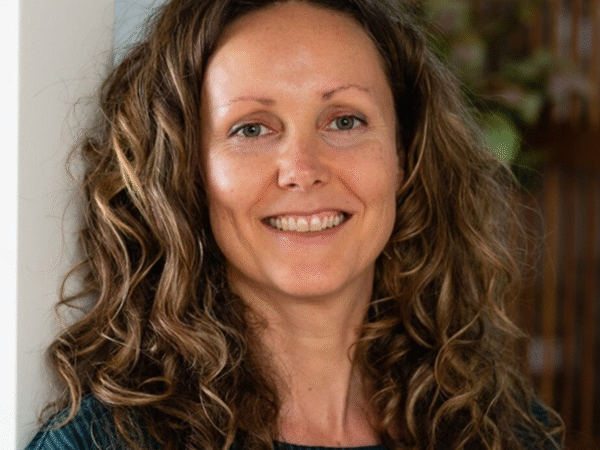
Dr Mandy Godwin is a registered psychologist, researcher in the transition to parenthood, and mum of three.

She founded Mums in Bloom and offers telehealth psychology sessions through her private practice, Dr Mandy Godwin Psychology.

You can find out more about Mums in Bloom here


Frequently asked questions about getting the right support

Fill the Freezer - recipes to gift or make ahead

Whether you’re preparing for your own postpartum, showing love to a new mum, or simply wanting to make everyday life a little easier, food is one of the most nourishing gifts we can give. This recipe collection has been created with you in mind: quick to make, freezer-friendly, and packed with ingredients that fuel tired bodies and busy minds. Each one can be baked ahead of time for yourself or wrapped up and given as a thoughtful gift. Includes 6 recipes, a shopping list and a plan to get them all prepped and ready in one go.


Looking for Perinatal Mental Health Support?

Whether you are pregnant, preparing for birth or navigating the first year after having your baby, you do not have to work it out alone.

Explore our directory of experienced perinatal psychologists, counsellors and maternal mental health professionals to find support that feels right for you and your family.

Leave a Comment

Your email address will not be published. Required fields are marked *

Learn about the support you didn't know you needed.

We have cherry picked the most useful resources for your fourth trimester so that you don't have to waste precious hours searching.

Human Design for Motherhood: Understanding Yourself, Your Child, and Your Parenting Article Featured Image