

Human Design for Motherhood: Understanding Yourself, Your Child, and Your Parenting

At first glance, you might wonder how Human Design is relevant to your motherhood journey, but I want to share with you the incredible wisdom that this modality offers.
The way I see it, this support comes in three powerful ways.
It provides guidance and understanding of yourself — how you’re wired and what your needs are.
It offers insight into your child and practical guidance to parent in accordance with their unique nature.
It strengthens the bond between you, helping you foster a relationship built on understanding rather than expectation.
What Is Human Design?
At its core, Human Design is a self-discovery system that combines ancient wisdom from astrology, the I-Ching, Kabbalah, and the chakra system with modern science to create a unique blueprint of how you’re energetically designed to move through the world.
Based on your date, time, and place of birth, it offers deep insight into what makes you uniquely you — so that you can release the pressure to do things like everyone else and trust your own path.
It offers insight into:
The unique way your intuition works
Your life purpose
Your natural strengths
Where you are most vulnerable to outside conditioning
Human Design sees you in a way that often leaves people wondering, how can this chart possibly know me this well? This validation is life-changing — it softens years of self-criticism and offers permission to embrace yourself exactly as you are.
How Human Design Can Support You as a Mother
At a time when so much of the focus goes outward to your child, what often gets missed is your inner world, which leads many mothers to feel unseen, unsupported, and unsure.
Human Design turns the focus back to you, helping you reconnect with who you are and honour your needs. Through Human Design you can understand:
What you need and how you best use your energy
How you make decisions
How to navigate relationships
How to live, work, and rest
These aren’t things you leave behind in motherhood — they’re the foundations that support you when it’s most needed.
When you understand yourself, live in alignment with your own design, and shift your consciousness, the impact ripples outward — uplifting your family, children, partner, and wider community.
Examples of How Human Design Can Support You
Some people have access to a consistent, sustainable source of energy, while others experience energy in ebbs and flows and require more rest. Understanding your energy type helps you recognise your rhythm and release the pressure to keep up.
Some people make quick, instantaneous “follow your gut” decisions; others need time to feel into a decision — anywhere from overnight to several weeks. Knowing your decision-making process is life-changing, especially in motherhood.
Some mothers have an investigative nature — they feel safe when researching and seeking understanding, while others learn best through trial and error or quiet reflection.
Some people require more time alone than others. While this can be hard in early motherhood, prioritising even micro-moments of alone time can be deeply restorative.
Understanding your Human Design not only helps you live with more ease and flow, it also gives you a permission slip to prioritise your needs without guilt — knowing that when you feel better, you show up for your children better.
How Human Design Can Support Your Child
Just as you have your own unique blueprint, so does your child. Every child has their own rhythm, and Human Design helps you see and honour it.
It provides language and insight into your child’s energy, needs, natural way of being, and decision-making process, so you can support them to thrive as their authentic self.
In a world of one-size-fits-all parenting advice, Human Design stands out by offering practical, personalised guidance that recognises your child’s individuality.
Examples of How Human Design Can Support Your Child
Some children have higher rest requirements, while others need plenty of activity and stimulation.
Some children need a longer wind-down before bedtime; others fall asleep easily after using their energy during the day.
Some children thrive on open-ended questions; others respond best to yes/no questions.
Some children crave freedom and autonomy — when restricted, frustration or anger can arise.
Some children experience consistent energy, while others have bursts followed by downtime.
Some energy types love variety and change; others prefer mastering one thing at a time.
How Human Design Can Support the Mother–Child Relationship
Understanding your own design and your child’s design individually is powerful — but the real depth comes when you explore how your energies interact.
For example:
You may have consistent energy, while your child experiences bursts and rest phases.
You may make quick decisions, while your child needs time to reflect.
You may naturally absorb emotions, making your child’s outbursts feel heightened.
You may thrive on social interaction, while your child prefers solitude.
Recognising these differences helps you adjust expectations, honour both sets of needs, and parent with compassion.
And this understanding doesn’t stop with your child — it extends to your partner, family, and friends. When you understand the energetic dynamics between people, communication becomes easier and more empathetic.
Human Design helps you see the people in your life for who they truly are, not who you think they should be.
Strengthening Your Mother’s Instinct
One of the greatest gifts of Human Design is how it reconnects you to your intuition. It doesn’t replace your mother’s instinct — it strengthens your trust in it.
You already know your child better than anyone. You know your values and your vision for parenting. But in a world of outside noise and well-intentioned advice, it can be hard to tune in.
Human Design helps you understand how your intuition shows up for you and gives you permission to follow it, even if it looks different from what others are doing.
Next Steps
Human Design is a complex system with many moving parts. If you’re curious to learn more, start with your Big 3 in Human Design — your energy type, strategy, and authority. These foundational elements influence everything else.
For a deeper and more personalised experience, a Human Design reading offers 1:1 guidance to explore both your and your child’s designs — helping you create more flow, ease, and harmony in family life.
To find out more about Human Design and Align with Alice explore here and here.
You may also be interested in...
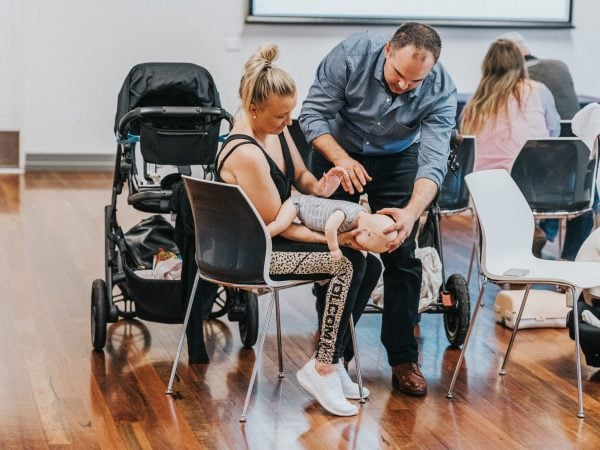

Emergcare
Emergcare understand that the birth of a baby marks the beginning of a parent’s journey. Their approach to first aid education goes beyond just teaching life-saving skills — it’s about supporting families during their transition to parenthood and helping them build their village of support.


Newborn Home Care
Newborn Home Care is a home-based and Zoom online nursing and lactation service providing parents with guidance and support to welcome a new baby. We can help you to settle into life with your new little one and feel confident with how to feed and care for him in ways that help him be content. An International Board Certified Lactation Consultant is available, offering the latest evidence-based support to help with any breastfeeding or lactation concerns.

Learn about the support you didn't know you needed.
We have cherry picked the most useful resources for your fourth trimester so that you don't have to waste precious hours searching.
Article - Louise Barton + Elisha Wildblood (Not Another Onesie)
How to Use Not Another Onesie: Find the Best Pregnancy, Birth & Postpartum Support in Australia
At Not Another Onesie, we’ve created a beautiful, easy-to-use space to help you access the best pregnancy and postpartum support in Australia, from doulas and physios to lactation consultants, sleep guides, and emotional wellbeing tools. This is your step-by-step guide to using our site, finding your village, and getting the kind of care that truly supports you.
Article - Kendra Greig (The Homecoming Concierge)
Inside the Postpartum Home Preparation Service Transforming New Parents’ First Days
The NEST postpartum home preparation service is designed to create a soft landing for new parents and parents travelling with young children, this offering blends practical support, newborn home organisation, nourishing postpartum food, thoughtful touches, and a deep understanding of what new mothers and families truly need in those early days. We interviewed Kendra Greig the founder of NEST, to explore what inspired this unique service, what families can expect, and how a beautifully prepared home can ease the transition into newborn life.
Article - Fiona Maria (Sing High Sing Low)
The Surprising Power of Singing Together: A Mums Group with a Difference
I started Sing High Sing Low to create spaces where women of all life stages could connect, unwind, and experience the joy of shared song. The work I do is inspired by the beautiful model developed by Singing Mamas in the UK, which has been recognised by the World Health Organization for its positive impact on perinatal mental health and maternal wellbeing.

Article - Elise Clement (Psychotherapy & Coaching)
Managing Emotions as a New Mother
Managing emotions as a new mother can be tough. This post shares simple tips to help you process feelings, set boundaries, and support your well-being. Early motherhood is an emotional rollercoaster. This post shares practical tips to help you process feelings and nurture your well-being.
Interview - Louise Barton + Elisha Wildblood (Not Another Onesie)