Can You Trust ChatGPT for Pregnancy and Parenting Advice? What AI Can and Can’t Do for Mums

Is ChatGPT Parenting Advice Reliable and When Is AI Actually Useful?

It’s 2am. You have a pregnancy question, your baby won’t settle, feeding suddenly feels hard or you’re wondering whether something you’re experiencing is normal. Once, you probably would have Googled it. Now, there’s a good chance you might ask ChatGPT, Claude or some other AI, and we get it.

AI is fast. It’s available around the clock. It can explain complicated information in simple language, help organise an overwhelmed brain and give you somewhere to start when you’re not even sure what question to ask. For pregnant women, new mums and parents carrying an enormous mental load, that can feel genuinely useful.

But as ChatGPT parenting advice, AI pregnancy advice and AI health information become increasingly easy to access, there is another question worth asking:

Are we getting better support or simply more information?

Because the two are not the same. And when we spoke to professionals working directly with families, in paediatrics, lactation, relationships and first aid education,  the message was remarkably consistent. AI has a place. But knowing when information needs to become real-life care, support, assessment, conversation or action matters too.

So, Is AI Actually Useful for Pregnancy and Parenting?

Yes, potentially it can be.  Used thoughtfully, AI can be a helpful tool.

It can help you:

  • understand an unfamiliar pregnancy or medical term
  • prepare questions before an appointment
  • organise meals or routines
  • find out what different health professionals actually do
  • turn an overwhelming amount of information into something easier to understand.

Research is also showing that AI can provide quite good general pregnancy information.

A 2026 study had 40 obstetricians and gynaecologists assess ChatGPT responses to 22 common pregnancy questions. The answers scored close to 4 out of 5 overall for accuracy, safety, understandability and comprehensiveness. However, responses to more context-dependent questions showed greater variability. PubMed

A separate 2025 study found 83- 89% overall accuracy for pregnancy nutrition information and 96 – 98% for pregnancy warning signs. However, the researchers found that responses could vary depending on how the question was phrased, the language used and the individual woman’s circumstances. PubMed

And that gets to the heart of it: AI can be very good at providing general information, but pregnancy, babies and families are rarely generic. And this is something the professionals we spoke to are already seeing in real life.

The problem comes when a useful starting point starts being treated as the final answer.

AI Can Explain Your Child’s Symptoms. A Paediatrician Can Assess Your Child.

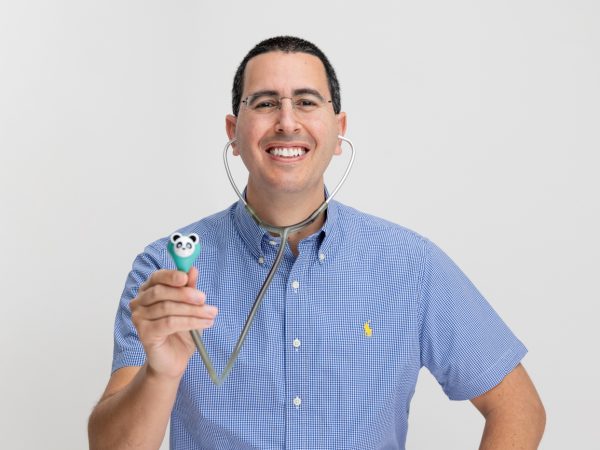
Dr Samual Heitner, a paediatrician and founder of Telebaby, says he is increasingly seeing parents use AI for questions about rashes, crying and unsettled babies, vomiting, possible allergies, fevers, growth and development. And he recognises the value in it. AI can help parents understand medical terminology, learn about common childhood illnesses, recognise potential warning signs and prepare better questions for their healthcare provider. For straightforward information, that can be incredibly helpful.

But there is an important limitation. As Dr Sam explains:

“My biggest concern is that AI can give very convincing answers that aren’t necessarily correct. It doesn’t have the full clinical picture, and its advice can sometimes lead to unnecessary anxiety, inappropriate treatments or, more concerningly, false reassurance.”

A constantly crying baby, for example, might prompt AI to suggest colic, reflux or normal newborn behaviour. But Dr Sam points out that an unsettled baby could also have an underlying medical issue,  something that may only become apparent when someone actually examines the child, takes a full history and knows which questions to ask.

The same applies to something as common as vomiting. AI may reasonably explain infant reflux. A paediatrician can assess whether there may be another explanation that needs further investigation.

As Dr Sam puts it:

“We don’t just assess one symptom in isolation. We look at the whole child, including their age, growth, development, medical history and overall wellbeing.”

And perhaps his advice to parents sums up the balance perfectly:

“AI can be a useful tool for information, but it can’t replace a doctor’s assessment of your child. Use it to become better informed, recognise when to seek medical advice and ask better questions, rather than relying on it to make medical decisions about your child.”

AI Can Explain Breastfeeding. A Lactation Consultant Can Watch Your Baby Feed.

Feeding is another area where AI has potential to be useful.

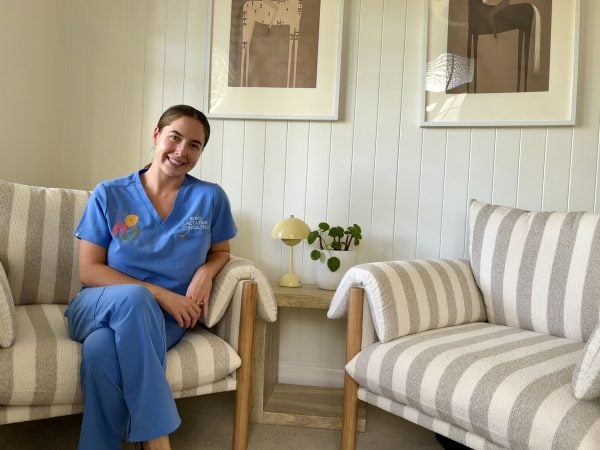
Isabella from Bond Lactation Consulting is already seeing mums use AI to track feeds, sleep and symptoms and to find information about infant feeding. She sees benefits, particularly in making complex research more accessible.

As Isabella explains:

“I think AI can be a really useful tool, particularly for organising information and making evidence more accessible. I also think it can be incredibly helpful for simplifying research articles and medical journals.”

For an exhausted new parent trying to make sense of a huge amount of information, that can be incredibly valuable. But breastfeeding and infant feeding are not simply information problems. The same feeding concern can have many different causes.

AI only knows what you tell it. An IBCLC can see things you may not even know are relevant. During a consultation, Isabella can observe a feed, assess positioning and attachment, watch sucking and swallowing, review weight gain and feeding history, and look at how all those pieces fit together.

As she explains:

“No two mums or babies are the same, and feeding support needs to be tailored to each family’s individual circumstances, goals and challenges.”

And often it is the small things that matter.

“AI relies on the information someone provides, whereas in a face-to-face consultation I can make real-time observations, recognise things a parent may not have noticed themselves, try different approaches and see how the baby responds.”

Another part of feeding support matters just as much. The person behind the feeding problem. Their goals. Their worries. What feels achievable in their family. Whether they need a practical adjustment or simply someone knowledgeable to reassure them that they are doing okay.

Isabella puts it beautifully:

“ Use AI to complement professional care, not replace the personalised assessment and support that families deserve.”

AI Can Tell You How to Perform First Aid. It Can’t Teach You How to Respond Under Pressure.

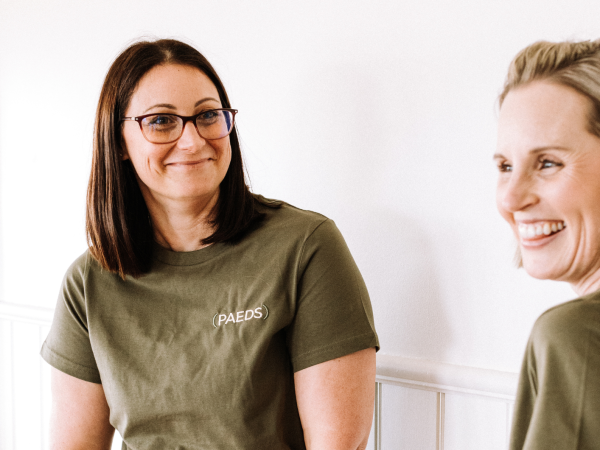
First aid may be one of the clearest examples of the difference between knowing something and being able to do it. Sarah Duncanson from PAEDS Education is also seeing the shift from parents Googling health and safety questions to asking ChatGPT. AI can explain terminology, provide general information about childhood illnesses, help parents prepare questions for appointments and reinforce first aid concepts they have already learnt.

But Sarah makes an important distinction:

“We need to distinguish between using AI to build knowledge and using AI to make decisions in an emergency. They’re two very different things.”

Because when a child is choking, unconscious or struggling to breathe, those first few minutes matter. AI cannot reliably assess a child’s breathing, colour or level of consciousness. It relies entirely on the information someone types in, at exactly the moment a frightened parent may not know which details matter. And first aid itself is practical. You can read how to perform CPR. That is very different from practising compressions, having your technique corrected, and learning how to respond under pressure.

As Sarah explains:

“You can read a thousand instructions about CPR, but that’s very different from actually practising it on a manikin, having someone correct your technique and knowing what it feels like to deliver effective compressions.”

First aid requires knowledge. But it also requires muscle memory, decision-making and confidence.

And one of the most powerful points Sarah makes is this:

“You don’t rise to the occasion simply because you care deeply about your child. You rely on what you’ve learned, practised and prepared for.”

AI can help you learn about it. A qualified first aid educator can help you practise what you may one day need to actually do.

AI Can Describe Pelvic Floor Symptoms. A Physio Can Assess Your Body.

Ask AI about leaking, pelvic heaviness, abdominal separation, pain during sex or postpartum recovery and it can give you a very respectable explanation. But your body isn’t a generic description. A pelvic health or women’s health physiotherapist can assess your muscles, movement, breathing, abdominal wall, scar tissue, strength and symptoms. They can ask questions you may not have realised were relevant. And perhaps most importantly, they can reassure you that the uncomfortable, embarrassing or strange things happening in your body are worth talking about. Having a human there in front of you to reassure you and guide you is something that AI can’t replace.  You don’t have to Google or AI your symptoms in silence.

There are people whose entire job is helping women with exactly these things.

AI Can Tell You About Birth. A Midwife or Doula Can Know You Through It.

There is almost endless information available about pregnancy and birth. ChatGPT can explain stages of labour, birth interventions, pain relief options or questions to include in a birth plan.

A birth educator can help you and your partner actually understand those choices and feel prepared to make them. 

A midwife can bring clinical knowledge together with an understanding of your pregnancy, your medical history and your baby.

A doula can provide continuous practical and emotional support before, during and after birth.

And when things don’t unfold exactly as the textbook said they would, because birth rarely does, a real person can respond to what is happening in front of them. There is no replacement for the human touch and personal care that you receive from these professionals in one of the most intimate and vulnerable times in your life.

AI can give you a list of options. Human support can hold your hand and help you navigate the reality.

AI Can Give Relationship Advice. A Counsellor Can Hear Both Sides.

Becoming parents changes relationships. Sleep deprivation, mental load, intimacy, finances, identity, roles and the relentless nature of caring for a baby can put pressure on even strong relationships. And relationship counsellor Bree Baxter from Cultivation Counselling and the creator of ‘Me. We, Us’ has noticed a change in where mothers are taking those worries. Ten years ago, she says many people turned to Facebook groups or online communities. Now, she increasingly hears people say they have used AI, often late at night, to talk through a disagreement, feeling disconnected from a partner or wondering how to raise something that has been bothering them. There can be real value in that.

“AI can help someone find words for what they’re feeling or think about how to begin a conversation. It’s available straight away, and the response often feels gentle and non-judgmental.”

Sometimes that is exactly the starting point someone needs. But AI only hears one person’s version of the relationship.

As Bree explains:

“When someone asks AI about a difficult moment with their partner, it can only respond to the version of events it’s been given.”

It doesn’t know:

  • How exhausted both parents are.
  • How the workload is shared.
  • What each person has experienced before becoming a parent.
  • Or what has been happening between them for months or years.

And if AI becomes the place we take every vulnerable feeling, Bree raises another important question:

What connection might we be losing?

“Becoming a parent can be lonely, and it’s often the people around us who help us feel less alone: a partner, a friend, family, other parents or a counsellor. We say it takes a village to raise a child. That village needs to support the parents, too.”

In counselling, Bree can hear both partners. She can slow down an argument and explore what is sitting underneath it. She can understand why one person’s words are being heard very differently by the other. And she can hold two experiences at once without deciding who is right.

“AI can respond to one person’s account, but it can’t hear from both partners in the room or see how they interact.”

Again, AI may help start the conversation. A human can help two people actually have it, maintaining an energy of care and compassion. 

AI Can Sound Empathetic. But Human Connection Is Different.

This is perhaps one of the most interesting areas of AI. It can sound remarkably caring. You can tell it you’re overwhelmed and receive a calm, validating response within seconds.

For someone awake in the middle of the night or struggling to put feelings into words, that may genuinely help. But there is an important distinction. AI can generate language that sounds empathetic.

  • It does not actually experience concern for you.
  • It isn’t watching to see how you’re going tomorrow.
  • It doesn’t notice the way you walked into the room.
  • It doesn’t remember how you were coping six weeks ago.
  • And it cannot take responsibility for your care.

Research into AI and perinatal mental health has highlighted both its potential and limitations, including concerns around privacy, crisis recognition, over-reliance and what researchers have described as the illusion of empathy. Sometimes mothers don’t need another reassuring answer. They need someone to know them, to share a warm mug of tea with them, to feel the warmth of someone’s smile, or  to feel the calming and caring energy that a person radiates in their presence or through their voice. 

AI Can Tell You How Babies Sleep. A Sleep Professional Can Understand Your Family.

Baby sleep is exactly the kind of topic parents turn to the internet for. There is no shortage of information. AI can explain wake windows, sleep associations, settling approaches and routines. But babies aren’t algorithms. Temperament, feeding, development, health, family values, parental wellbeing and what actually feels sustainable in your home all matter. A qualified sleep and settling professional can work with the baby and family in front of them rather than offering a generic solution. Sometimes the most valuable thing isn’t another schedule.

It’s someone with real life experience helping you work out what makes sense for your individual baby, family and circumstances.

AI Can Create a Meal Plan. A Nutrition Professional Can Understand Your Health.

Ask ChatGPT for a pregnancy meal plan or postpartum recipes and you can have one in seconds. Fantastic. This is one of those areas where AI can genuinely lighten the mental load. But nutrition can also become highly individual. Pregnancy requirements, allergies, iron levels, diabetes, digestive issues, breastfeeding, food restrictions, medications and other health conditions can change what is appropriate for you.

A dietitian, nutritionist, naturopath or appropriately qualified practitioner can look at the wider picture. They can take the appropriate tests to see what your individual situation requires and explore the questions you may not even know are relevant. They can provide care and follow-up support to keep you on track as well.  They may also be able to recommend other local areas of support for you as well.

And sometimes support isn’t about advice at all. Sometimes the best support is someone simply bringing you dinner. Which is why postpartum meal services and practical support matter too.

Knowing what you should eat and having personalised guidance from a professional who cares are two very different things.

AI Can Explain Loneliness. It Can’t Become Your Village.

This may be the biggest gap of all. AI can give you ideas for meeting other mums. It can tell you why social connection matters. It can suggest ways to ask for help. But it cannot become the friend who texts:

“Want to go for a walk?”

It can’t sit beside you at mothers’ group. It can’t introduce your baby to another baby. It can’t laugh with you about the ridiculous night you’ve just had. It can’t give your partner a hug. It can’t show up with coffee.

Community groups, mothers’ groups, dads’ groups, peer support organisations and local connections provide something technology simply cannot recreate: Belonging.

And human beings need that. Mothers especially need that.

The Risk Isn’t AI. It’s Thinking AI Is Enough.

We don’t think mothers should be frightened of AI. Let it organise the hospital bag. Ask it to explain the acronym from your appointment. Use it to build a list of questions for your midwife. Let it help you understand what a pelvic floor physio does. Ask it what kind of professional might help with something you’re experiencing. Use it to translate complicated information into language you can actually understand. Use it to take some of the mental load away.

But don’t let easy access to information convince you that you are supposed to manage everything yourself. Because this is perhaps the unintended downside of having endless information available.

We can know more than ever before and still feel incredibly alone. And across the professionals we spoke to, one idea kept coming through. AI works best when it helps families become more informed, ask better questions and reach the right support. Not when it tries to replace it.


What About AI Designed Specifically for Mothers?

It’s also worth recognising that not all AI parenting tools are developed in the same way. Philippa Scott of Fantastic Futures has developed Mum Wise, which is a 24/7 AI parenting support companion created by drawing on 22 years of experience supporting mothers and families. According to Philippa, it has been developed around a trauma-informed, attachment-focused and neurodivergence-aware approach, with the aim of offering more considered support than a general-purpose AI tool. It is also intended to recognise its limits and encourage professional or human support where appropriate.

For Philippa, that balance is central: “I don’t believe AI can replace the wisdom, intuition and connection that come from real human relationships. But I do believe it can make quality support more accessible, especially in those moments when a mother needs someone and nobody is available.”

It’s an interesting example of where more specialised AI may sit within this changing landscape, offering another layer of accessible guidance while still acknowledging that there are things only real people, relationships and professional care can provide.


Sometimes You Need to Close the Screen and Find the Person

Pregnancy, birth and motherhood are deeply human experiences.

They involve

  • bodies
  • relationships
  • energy
  • fear
  • recovery
  • identity
  • touch
  • observation
  • community 
  • & connection

Technology can support those things. It cannot replace them.

AI Can Be Part of the Village. It Cannot Be the Village.

At Not Another Onesie, we believe mothers deserve more than a search bar. That’s why our village brings together support services across pregnancy, birth, postpartum and beyond.

You might need:

  • a paediatrician or child health professional
  • a midwife or doula
  • a birth educator
  • a lactation consultant
  • a pelvic health or women’s health physiotherapist
  • a perinatal psychologist or counsellor
  • a relationship counsellor
  • a baby and child first aid educator
  • a sleep and settling professional
  • a dietitian, nutritionist or naturopath
  • postpartum practical support or meal delivery
  • a mothers’ group or community
  • support specifically for dads and partners
  • or a service you didn’t even realise existed.

Sometimes the hardest part isn’t knowing that you need help. It’s knowing what kind of help exists and where to find it. That is where technology can be wonderful. It can help point us in the right direction. But at the end of that search, very often, you still need a person. Someone who can see you. Listen to you. Assess you. Teach you. Remember you. Stand beside you. And care what happens next.

AI can give you information.

Human support gives you connection, context and care.


Find Your Village of Pregnancy, Postpartum and Parenting Support

The Not Another Onesie directory brings together pregnancy, birth, postpartum and parenting support from across Australia in one easy-to-navigate place.

Explore support by category and find the professionals, organisations and communities that can help you through pregnancy, birth, the fourth trimester and beyond.

Because sometimes the most useful answer isn’t another answer.

It’s knowing who to call.

Before we leave the conversation there, it’s worth acknowledging that this is only one part of a much bigger discussion.

This article has focused on how mums are using AI for pregnancy, postpartum and parenting information, and particularly on accuracy, safety and the importance of knowing when real human support is needed. But of course, the conversation around AI is much bigger than that. There are also important questions about privacy and how personal information is used, bias, the environmental impact of AI, and what this technology may mean for the future and the way we live, connect and seek support. Those are important conversations in their own right, and deserve a whole discussion of their own.

This article provides general information only and is not a substitute for individual medical or healthcare advice. If you are concerned about your health or your baby’s health, speak with an appropriately qualified healthcare professional.

Photo: Celeste Shiels Photography

Let’s Gather Your Village

We have created a free Not Another Onesie eBook to help you gather the support you need to thrive once your baby comes along…


Leave a Comment

Your email address will not be published. Required fields are marked *

Learn about the support you didn't know you needed.

We have cherry picked the most useful resources for your fourth trimester so that you don't have to waste precious hours searching.

The Support You Didn’t Know You Needed: How Compression Wear  Supports Pregnancy and Postpartum Recovery Article Featured Image